Arrival


Departure

HOME
HOTEL
SERVICE
ROOMS
RESTAURANT
BREAKFAST
MEETING ROOM
COLLECTABLE ART
FARES
OFFERS
BOOK ONLINE
CONTACT US
HOW TO REACH US
MONUMENTS
FAQ
LINKS

Servizio WiFi


Home arrow Monuments


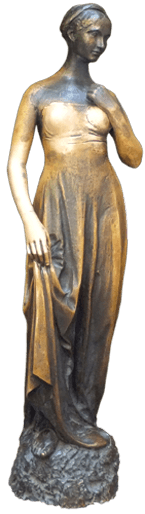
THE TOMB OF JULIET
From the cloister of a building that once was a former Franciscan monastery, San Francesco al Corso, one can access the structure with the tomb of Juliet. In 1935 the area was readjusted to provide another space linked to the legend of Shakespeare, that is the place where were the tombs (also called the Arca) that welcomed the bodies of Romeo and Juliet, creating a new point of tourist attraction, in addition to the Juliet’s house in Via Cappello. Within the Church and in the Monastery there is the Museo degli Affreschi "G.B. Cavalcaselle" inaugurated in the 70‘s.
Cycles of frescos are hosted in the Museum from buildings of Verona, from the Middle Ages to the XIV century and XIX century sculptures, while the church welcomes large works on canvas from the XVI to the XVII century. There are set out in the historic building, Roman amphoraes of the I century a.C. found during archaeological excavations, carried out in the area of a possible port. In the new area, next to the ancient construction, there are modern sculptures and stone of various epochs.

THE TOMB OF JULIET
From the cloister of a building that once was a former Franciscan monastery, San Francesco al Corso, one can access the structure with the tomb of Juliet.
In 1935 the area was readjusted to provide another space linked to the legend of Shakespeare, that is the place where were the tombs (also called the Arca) that welcomed the bodies of Romeo and Juliet, creating a new point of tourist attraction, in addition to the Juliet’s house in Via Cappello. Within the Church and in the Monastery there is the Museo degli Affreschi "G.B. Cavalcaselle" inaugurated in the 70‘s.
Cycles of frescos are hosted in the Museum from buildings of Verona, from the Middle Ages to the XIV century and XIX century sculptures, while the church welcomes large works on canvas from the XVI to the XVII century. There are set out in the historic building, Roman amphoraes of the I century a.C. found during archaeological excavations, carried out in the area of a possible port. In the new area, next to the ancient construction, there are modern sculptures and stone of various epochs.

ROMAN THEATER (TEATRO ROMANO)
The construction of the most ancient building in Verona, the Roman Theater, dates back to the end of the I century b.C.
It was built behind Colle San Pietro, to exploit the natural inclination of the ground to build the staircases, as the Greeks made before the Romans. The city of Verona, since its foundation, was in fact divided by the river Adige, part in the level zone, part around and above Colle San Pietro.
The theater was built among the two Roman bridges that connected the two parts of the city, one of which is Ponte Pietra, visible still today, and it was used by the Romans to assist to the representations, tragedies and comedies, that they had learned from the Greek culture.

Of this monument in Verona unfortunately, there is only a little part, since during the centuries its stones were stripped to build towers and medieval buildings and finally covered by same buildings. Only at the end of the XIX century, the area under which rested the theater for almost two thousand of years, was purchased by the municipality of Verona, the constructions were demolished and what remained of the Roman Theater was brought again to the light.
The only building saved to the demolition was the church of the Santi Siro e Libera, that rises still today on the staircases, interrupting its course.
The arcs sustaining the staircases remain as suggestive demolished ruins. During the excavations, finds of every kind emerged: sculptures, decorations, inscriptions, placed in the courtyard near the entrance, or in various museums of the city.

The Roman Theater and the Arena, are used despite their conditions, especially in the summer, as perfect locations for the Festival Shakespeariano and the Verona Jazz Festival. Purchasing the ticket for the theater, it’s possible to visit also the Archaeological Museum in Verona that is placed in the ex-convent of the Jesuits, where the numerous finds, found in the city of Verona, have been located.

THE ARENA
Together with the Julietta’s house, the Arena is the most important monument in Verona. The Amphitheatre was built in the first half of the I century A.C., in the period which marked the end of Augustus’ reign and the beginning of that of Claudius. It is the third largest amphitheatre in Italy, after the Colosseum and the amphitheatre of Capua. In its “platea” and “cavea” the amphitheatre could contain 20.000 people. The façade was built in limestone from the Valpolicella quarries. Its original colour has come to life thanks to recent restoration. The second internal ring remains intact with its double tier of seventy-two arches.

The amphitheatre consists of three concentric rings: only a brief section of the external ring remains, the so-called “Ali”.
Its elliptical shape produces perfect acoustics from every physical stand point in the arena and enhances its capacity to accommodate a great number of people. Performances used to take place in the centre of the amphitheatre, the “arena” (hence the name) or the area covered in sand where gladiatorial combats were held, the sand being used to absorb the blood of gladiators and animals.

THE SCALIGER TOMBS
The Scaliger Tombs is a group of five Gothic funerary monuments in Verona.
The tombs are located in a court of the church of Santa Maria Antica, separated from the street by a wall with iron grilles. Built in Gothic style, they are a series of tombs.

The tombs are placed within a wrought iron enclosure decorated with a stair motif and are those of the following notable members of the Scaliger dynasty.

The first tomb, built in the 14th century, was the Cangrande I’s one, according to the will of the deceased, the most famous Scaliger ruler of the city. The designer was the architect of the church of Santa Anastasia, who planned it in the shape of a Gothic tabernacle, supported by richly harnessed dogs.
On the summit of the baldachin was once an equestrian statue of Cangrande, now replaced by a copy, the original is in the museum of Castelvecchio.

Begun in 1345, the tomb of Mastino II was modified during its construction. The baldachin has religious themes sculpted on the pediment, and is also surmounted by the equestrian statue of Mastino II.
The third one, dating from 1375, and the most richly decorated. It was designed by Bonino da Campione, and has sculptures portraying warrior saints, Gospel characters, the Virtues and the Apostles, and the big equestrian statue of Cansignorio.
The tomb of Alberto II, unlike the others, it has no baldachin but only a sarcophagus, though richly decorated. It dates from 1301.
Finally the tomb of Giovanni Dalla Scala. This monument is built into the wall of the church. It was finished in 1359 by Andriolo de' Santi, and until 1400 it was located in the church of San Fermo Maggiore.


HOTEL POSTUMIA - Dossobuono (Verona) Tel (+39) 0458600671 Fax (+39) 0458618700 info@hotelpostumia.it